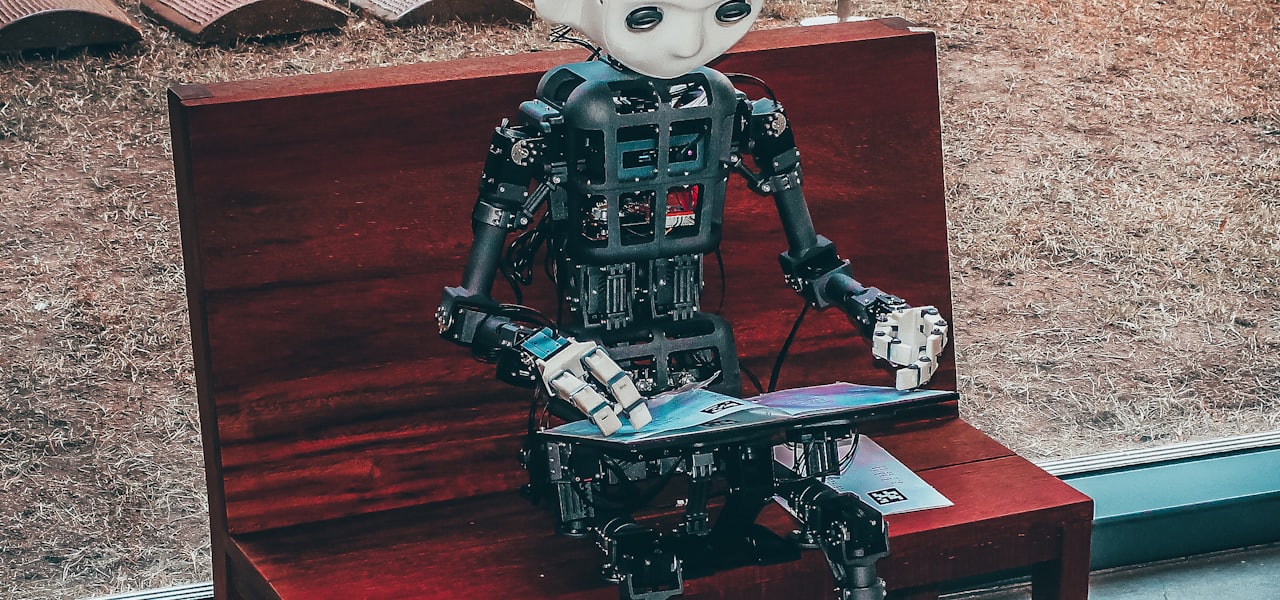
Character computing is a trans-disciplinary field of research at the intersection of computer science and psychology. It is any computing that incorporates the human character within its context. Character is defined as all features or characteristics defining an individual and guiding their behavior in a specific situation. It consists of stable trait markers (e.g., personality, background, history, socio-economic embeddings, culture,...) and variable state markers (emotions, health, cognitive state, ...). Character computing aims at providing a holistic psychologically driven model of human behavior. It models and predicts behavior based on the relationships between a situation and character. Three main research modules fall under the umbrella of character computing: character sensing and profiling, character-aware adaptive systems, and artificial characters. == Overview == Character computing can be viewed as an extension of the well-established field of affective computing. Based on the foundations of the different psychology branches, it advocates defining behavior as a compound attribute that is not driven by either personality, emotions, situation or cognition alone. It rather defines behavior as a function of everything that makes up an individual i.e., their character and the situation they are in. Affective computing aims at allowing machines to understand and translate the non-verbal cues of individuals into affect. Accordingly, character computing aims at understanding the character attributes of an individual and the situation to translate it to predicted behavior, and vice versa. ''In practical terms, depending on the application context, character computing is a branch of research that deals with the design of systems and interfaces that can observe, sense, predict, adapt to, affect, understand, or simulate the following: character based on behavior and situation, behavior based on character and situation, or situation based on character and behavior.'' The Character-Behavior-Situation (CBS) triad is at the core of character computing and defines each of the three edges based on the other two. Character computing relies on simultaneous development from a computational and psychological perspective and is intended to be used by researchers in both fields. Its main concept is aligning the computational model of character computing with empirical results from in-lab and in-the-wild psychology experiments. The model is to be continuously built and validated through the emergence of new data. Similar to affective and personality computing, the model is to be used as a base for different applications towards improving user experience. == History == Character computing as such was first coined in its first workshop in 2017. Since then it has had 3 international workshops and numerous publications. Despite its young age, it has already drawn some interest in the research community, leading to the publication of the first book under the same title in early 2020 published by Springer Nature. Research that can be categorized under the field dates much older than 2017. The notion of combining several factors towards the explanation of behavior or traits and states has long been investigated in both Psychology and Computer Science, for example. == Character == The word character originates from the Greek word meaning “stamping tool”, referring to distinctive features and traits. Over the years it has been given many different connotations, like the moral character in philosophy, the temperament in psychology, a person in literature or an avatar in various virtual worlds, including video games. According to character computing character is a unification of all the previous definitions, by referring back to the original meaning of the word. Character is defined as the holistic concept representing all interacting trait and state markers that distinguish an individual. Traits are characteristics that mainly remain stable over time. Traits include personality, affect, socio-demographics, and general health. States are characteristics that vary in short periods of time. They include emotions, well-being, health, cognitive state. Each characteristic has many representation methods and psychological models. The different models can be combined or one model can be preset for each characteristic. This depends on the use-case and the design choices. == Areas == Research into character computing can be divided into three areas, which complement each other but can each be investigated separately. The first area is sensing and predicting character states and traits or ensuing behavior. The second area is adapting applications to certain character states or traits and the behavior they predict. It also deals with trying to change or monitor such behavior. The final area deals with creating artificial agents e.g., chatbots or virtual reality avatars that exhibit certain characteristics. The three areas are investigated separately and build on existing findings in the literature. The results of each of the three areas can also be used as a stepping stone for the next area. Each of the three areas has already been investigated on its own in different research fields with focus on different subsets of character. For example, affective computing and personality computing both cover different areas with a focus on some character components without the others to account for human behavior. == The Character-Behavior-Situation triad == Character computing is based on a holistic psychologically driven model of human behavior. Human behavior is modeled and predicted based on the relationships between a situation and a human's character. To further define character in a more formal or holistic manner, we represent it in light of the Character–Behavior–Situation triad. This highlights that character not only determines who we are but how we are, i.e., how we behave. The triad investigated in Personality Psychology is extended through character computing to the Character–Behavior–Situation triad. Any member of the CBS triad is a function of the two other members, e.g., given the situation and personality, the behavior can be predicted. Each of the components in the triad can be further decomposed into smaller units and features that may best represent the human's behavior or character in a particular situation. Character is thus behind a person's behavior in any given situation. While this is a causality relation, the correlation between the three components is often more easily used to predict the components that are most difficult to measure from those measured more easily. There are infinitely many components to include in the representation of any of C, B, and S. The challenge is always to choose the smallest subset needed for prediction of a person's behavior in a particular situation.
IruSoft
IruSoft (Arabic: آيروسوفت) is an insurance regulatory platform designated for licensing, supervision and inspection of the insurance sector within a country. The platform introduced unique supervision-technology (suptech), insurance-technology (insurtech) and regulatory-technology (regtech) automated modules by which a regulator requires less resources to ensure fairness, transparency and competition and to prevent conflicts of interest in the sector. IruSoft was founded by Abdullah Al-Salloum and owned by the Insurance Regulatory Unit in Kuwait. The Insurance Regulatory Unit optimized processing insurance-sector's customer complaints by issuing Resolution No. (1) of 2022 that introduced IruSoft's complaints public module; an automated resolution center, by which the process of receiving submitted complaints, passing them on to the platforms of licensed insurance companies, tracking matter-related discussions and updates and getting them escalated if unresolved to be discussed by a committee assigned by the unit is integrally automated and analyzed for better key performance indicators.
Pivot to video
"Pivot to video" is a phrase referring to the trend, starting in 2015, of media publishing companies cutting staff resources for written content (generally published on their own web sites) in favor of short-form video content (often published on third-party platforms such as Facebook, Instagram, Twitter, YouTube, Snapchat, and TikTok). These moves were generally presented by publishers as a response to changes in social media traffic or to changes in the media consumption habits of younger audiences. However, many media commentators have argued that this shift was primarily motivated by advertising revenue, and that only advertisers, not consumers, prefer video over text. The pivot's contribution to job loss in the media industry has given the phrase "pivot to video" an association with decline, especially in a business context. Commentators have also noted a lack of transparency and accuracy in the viewership metrics reported by platforms such as Facebook, pointing out that abrupt shifts in platforms' proprietary algorithms can have devastating effects on publishers' viewership, traffic, and revenue. Following a scandal in which Facebook revealed it had artificially inflated numbers to its advertisers about how long viewers watched ads, many journalists and industry analysts concluded that the shift to video was based on such misleading or inaccurate metrics, which created a false impression that there was customer demand for additional video content. == History == Streaming media technology has been available since the early 1990s, though it was relatively low-fidelity and not widely available until the mid-2000s. In 2007, traditional media publishers including the New York Times, Washington Post and Time Inc. created new divisions to develop web videos, and Facebook launched its video platform. Twitter purchased micro-video service Vine in October 2012, began adding native video streaming in late 2014, and acquired video-streaming service Periscope in January 2015. An August 2014 profile on BuzzFeed noted the publisher's large investment into video production, and observed that "the future of BuzzFeed may not even be on BuzzFeed.com. One of the company’s nascent ideas, BuzzFeed Distributed, will be a team of 20 people producing content that lives entirely on other popular platforms, like Tumblr, Instagram or Snapchat." On 7 January 2015, Facebook issued a statement about "the shift to video," reporting that "since June 2014, Facebook has averaged more than 1 billion video views every day." Media critic John Herrman argued that "What the shift to Facebook video means is that Facebook is more interested in hosting the things media companies make than just spreading them, that it views links to outside pages as a problem to be solved, and that it sees Facebook-hosted video as an example of the solution." In February 2015, the digital video-journalism publisher NowThis announced that it would operate without a home page, producing content to be published directly on social media platforms. In April 2016, Mashable fired much of its editorial staff, attempting to pivot away from hard news coverage while "growing Mashable across every platform" and doubling down on branded content and video. By December 2017, following a sale to Ziff Davis, Mashable retreated from this focus on video; Bernard Gershon, president of GershonMedia, said that the announcement of many such "pivots" were actually aimed primarily at investors. By 2017, "advertiser interest in video [was] insatiable... Any CFO is going to say 'How can we get more video?'" according to an executive of the publishers' trade association Digital Content Next. Publishers such as Vanity Fair, the Washington Post, and Sports Illustrated began adapting their own articles into cheap video content, either dictated by a newsreader or animated as a slideshow with captions, which could be shared on social platforms or even played alongside the articles themselves. June 2017 saw numerous high-profile pivots to video. Vocativ laid off at least 20 staff, including its entire newsroom, explaining that "as the industry evolves, we are undertaking a strategic shift to focus exclusively on video content that will be distributed via social media and other platforms." Fox Sports eliminated its entire writing staff to focus on creating "premium video across all platforms." And MTV News announced a restructuring that would cut its writing team. Less than two years earlier, MTV News had hired Grantland co-founder Dan Fierman to lead a significant investment in "longform" political and cultural reporting, but Fierman left in April 2017, and in June MTV announced it was "shifting resources into short-form video content more in line with young people's media consumption habits." In July, Vice Media laid off at least 60 employees, including the editor-in-chief of Vice Sports, while expanding video production. August 2017 saw Mic cut ten writers and directed the remainder of the newsroom to generate videos for social platforms. CEO Chris Altchek said "When you think about how many hours people spend watching video versus reading, the audience has already spoken." The move was ultimately unsuccessful, and Mic laid off the majority of its staff a year later before being sold to Bustle Media Group for a fraction of its former value. In September 2017, the for-profit wiki-hosting company Fandom began adding commercially produced videos to its otherwise user-generated wiki subdomains, explicitly citing the need to "keep up with user and advertiser expectations" by "diversifying our content," claiming without substantiation that "consumer patterns are changing," necessitating the addition of "complementary video" to accommodate that supposed need. Objection to the content in these videos and its sharp contrast against the content of the wiki sites to which they were applied led to vocal user backlash, leading Fandom CCO Dorth Raphaely to offer the following non-committal response: "I agree that with these videos in particular we did not deliver the right type of content experience." Movie Pilot CEO Tobi Bauckhage explained his company's fall 2017 layoffs as part of moving "from a text-based publishing model to video... a reaction to the fact that Facebook has changed their algorithms in favor of video instead of referral traffic over the last 12 months and we were losing money in the publishing bit of our business." As part of the company's change in direction, the majority of its staff was laid off and its parent company was sold to Webedia. In November 2017, magazine publisher Condé Nast cut jobs, reduced the frequency of several magazines, and shut down the print edition of Teen Vogue, then invested significant new resources in video production, with a senior executive saying "In the next 24 months, I hope that video is half our business... It’s critical. It’s the macro trend of content consumption." In February 2018, Vox Media cut approximately 50 employees, primarily those assigned to "social video," as Vox CEO Jim Bankoff admitted that those efforts were not "viable audience or revenue growth drivers." In August 2020, Facebook Inc. (now Meta Platforms) pivoted Instagram to video in an effort to replicate the success of TikTok and appeal to a younger audience, introducing "reels" as a form of video and promoting them aggressively. Reels accounted more than half the 20 most-viewed posts on Facebook; however, most of these reels were anonymous aggregations of content from TikTok. Elon Musk declared in early 2024 that X (formerly Twitter) was now a "video-first platform", which has been described by critics as a "pivot to video". == As euphemism == In 2017, Journalist Brian Feldman said that "'Pivoting to video' has become a business strategy for digital publishers common enough in recent months to be a kind of cliché — a slick way to describe something else: layoffs." In response, writers use the phrase as gallows humor shorthand for death or cancellation, as in "how do i tell my bf i want our relationship to pivot to video" (SkyNews' Mollie Goodfellow) or "Horse broke its leg, so we had to take it out back and help it 'pivot to video'" (blogger Anil Dash). == Facebook metrics controversy == In September 2016, Facebook admitted that it had reported artificially inflated numbers to its advertisers about how long viewers watched ads leading to an overestimation of 60-80%. Plaintiffs in a later court case allege the discrepancy was as high as 150-900%. Facebook apologized in an official statement and in multiple staff appearances at New York Advertising Week. Two months later, Facebook disclosed additional discrepancies in audience metrics. In October 2018, a California federal court unsealed the text of a class action lawsuit filed by advertisers against Facebook, alleging that Facebook had known since 2015 that its viewership numbers were highly inflated, that internal records showed it "was far from an hon
Client-side encryption
Client-side encryption is the cryptographic technique of encrypting data on the sender's side, before it is transmitted to a server such as a cloud storage service. Client-side encryption features an encryption key that is not available to the service provider, making it difficult or impossible for service providers to decrypt hosted data. Client-side encryption allows for the creation of applications whose providers cannot access the data its users have stored, thus offering a high level of privacy. Applications utilizing client-side encryption are sometimes marketed under the misleading or incorrect term "zero-knowledge", but this is a misnomer, as the term zero-knowledge describes something entirely different in the context of cryptography. == Details == Client-side encryption seeks to eliminate the potential for data to be viewed by service providers (or third parties that compel service providers to deliver access to data), client-side encryption ensures that data and files that are stored in the cloud can only be viewed on the client-side of the exchange. This prevents data loss and the unauthorized disclosure of private or personal files, providing increased peace of mind for its users. Current recommendations by industry professionals as well as academic scholars offer great vocal support for developers to include client-side encryption to protect the confidentiality and integrity of information. === Examples of services that use client-side encryption by default === Tresorit MEGA Cryptee Cryptomator === Examples of services that optionally support client-side encryption === Apple iCloud offers optional client-side encryption when "Advanced Data Protection for iCloud" is enabled. Google Drive, Google Docs, Google Meet, Google Calendar, and Gmail — However, as of Jul 2024, optional client-side encryption features are only available to paid users. === Examples of services that do not support client-side encryption === Dropbox === Examples of client-side encrypted services that no longer exist === SpiderOak Backup
Social Media Working Group Act of 2014
The Social Media Working Group Act of 2014 (H.R. 4263) is a bill that would direct the United States Secretary of Homeland Security to establish within the United States Department of Homeland Security (DHS) a social media working group (the Group) to provide guidance and best practices to the emergency preparedness and response community on the use of social media technologies before, during, and after a terrorist attack. The bill was introduced into the United States House of Representatives during the 113th United States Congress. == Background == === Social media === Social media is the social interaction among people in which they create, share or exchange information and ideas in virtual communities and networks. Andreas Kaplan and Michael Haenlein define social media as "a group of Internet-based applications that build on the ideological and technological foundations of Web 2.0, and that allow the creation and exchange of user-generated content." Furthermore, social media depend on mobile and web-based technologies to create highly interactive platforms through which individuals and communities share, co-create, discuss, and modify user-generated content. They introduce substantial and pervasive changes to communication between organizations, communities, and individuals. Social media differ from traditional or industrial media in many ways, including quality, reach, frequency, usability, immediacy, and permanence. === Virtual Social Media Working Group === First responders have increasingly used social media in emergency response and recovery operations. Social media tools are used to connect with citizens after a disaster and share information. The Virtual Social Media Working group (VSMWG) is an online platform that gives advice to first responders on how to safely and effectively use social media in emergency response operations. The working group is made up of subject matter experts from across the U.S. It was created by DHS in December 2010 and gives first responders guidance and best practices regarding the use of social media during emergencies. The DHS S&T and the VSMWG work with local and state governments, academics and nonprofits. Meetings of the VSMWG are chaired by the Under Secretary of Homeland Security for Science and Technology. == Provisions of the bill == This summary is based largely on the summary provided by the Congressional Research Service, a public domain source. The Social Media Working Group Act of 2014 would amend the Homeland Security Act of 2002 to direct the United States Secretary of Homeland Security to establish within the United States Department of Homeland Security (DHS) a social media working group (the Group) to provide guidance and best practices to the emergency preparedness and response community on the use of social media technologies before, during, and after a terrorist attack. The bill would require the Group to submit an annual report that includes: (1) a review of current and emerging social media technologies being used to support preparedness and response activities related to terrorist attacks, of best practices and lessons learned on the use of social media during the response to terrorist attacks that occurred during the period covered by the report, and of available training for government officials on the use of social media in response to a terrorist attack; (2) recommendations to improve DHS's use of social media and to improve information sharing among DHS and its components and among state and local governments; and (3) a summary of coordination efforts with the private sector to discuss and resolve legal, operational, technical, privacy, and security concerns. == Congressional Budget Office report == This summary is based largely on the summary provided by the Congressional Budget Office, as ordered reported by the House Committee on Homeland Security on June 11, 2014. This is a public domain source. H.R. 4263 would direct the Department of Homeland Security (DHS) to establish a working group to provide guidance and best practices on the use of social media technologies, specifically during a terrorist attack or other emergency. The group would prepare guidance for the emergency preparedness and response community. The bill would define the membership of the working group, which would include more than 20 experts from federal, state, local, and tribal governments along with nongovernmental organizations. The working group would be exempt from the Federal Advisory Committee Act and would be authorized to hold virtual meetings to fulfill the requirement to meet twice a year. The working group would be required to submit an annual report on emerging trends and best practices for emergency response through social media. Based on the cost of similar activities carried out under the DHS Acquisition and Accountability Efficiency Act and the Critical Infrastructure Research and Development Advancement Act of 2013, the Congressional Budget Office (CBO) estimates that the new DHS responsibilities and the annual report required by H.R. 4263 would cost a total of less than $500,000 annually, assuming the availability of appropriated funds. Enacting the legislation would not affect direct spending or revenues; therefore, pay-as-you-go procedures do not apply. H.R. 4263 contains no intergovernmental or private-sector mandates as defined in the Unfunded Mandates Reform Act and would impose no costs on state, local, or tribal governments. == Procedural history == The Social Media Working Group Act of 2014 was introduced into the United States House of Representatives on March 14, 2014, by Rep. Susan W. Brooks (R, IN-5). It was referred to the United States House Committee on Homeland Security and the United States House Homeland Security Subcommittee on Emergency Preparedness, Response, and Communications. On June 19, 2014, it was reported (amended) alongside House Report 113-480. On July 8, 2014, the House voted in Roll Call Vote 369 to pass the bill 375–19. == Debate and discussion == Nate Elliott, a social media expert at Forrester Research, explains that "the hope is when government or another authority tweets something, people will share it for them," but that this often doesn't happen. This problem, that "messages wash away very quickly," is the reason that the federal government is trying to formulate a better social media strategy. Rep. Steven Palazzo (R-MS), who co-sponsored the bill, stated that "social media has played a crucial role in emergency preparedness and response in Mississippi, including during disasters like Hurricane Isaac and the tornadoes that hit the Hattiesburg area a little over a year ago." He said that their goal with the bill was to "build upon existing public-private partnerships and use social media in a more strategic way in order to help save lives and property."
VueScan
VueScan is a computer program for image scanning, especially of photographs, including negatives. It supports optical character recognition (OCR) of text documents. The software can be downloaded and used free of charge, but adds a watermark on scans until a license is purchased. == Purpose == VueScan is intended to work with a large number of image scanners, excluding specialised professional scanners such as drum scanners, on many computer operating systems (OS), even if drivers for the scanner are not available for the OS. These scanners are supplied with device drivers and software to operate them, included in their price. A 2014 review considered that the reasons to purchase VueScan are to allow older scanners not supported by drivers for newer operating systems to be used in more up-to-date systems and for better scanning and processing of photographs (prints; also slides and negatives when supported by scanners) than is afforded by manufacturers' software. The review did not report any advantages to VueScan's processing of documents over other software. The reviewer considered VueScan comparable to SilverFast, a similar program, with support for some specific scanners better in one or the other. Vuescan supports more scanners, with a single purchase giving access to the full range of both film and flatbed scanners, and costs less. The VueScan program can be used with its own drivers or with drivers supplied by the scanner manufacturer, if supported by the operating system. VueScan drivers can also be used without the VueScan program by application software that supports scanning directly, such as Adobe Photoshop, again enabling the use of scanners without current manufacturers' drivers. In 2019 when Apple released macOS Catalina, they removed support for running 32-bit programs, including 32-bit drivers for scanning equipment. In response, Hamrick released VueScan 9.7, effectively saving thousands of scanners from being rendered obsolete. == Overview == VueScan enables the user to modify and fine-tune the scanning parameters. The program uses its own independent method to interface with scanner hardware, and can support many older scanners under computer operating systems for which drivers are not available, allowing old scanners to be used with newer platforms that do not otherwise support them. VueScan supports an increasing number of scanners and digital cameras; 2,400 on Windows, 2,100 on Mac OS X and 1,900 on Linux in 2018. VueScan is supplied as one downloadable file for each operating system, which supports the full range of scanners. Without the purchase of a license, the program runs in fully functional demonstration mode, identical to Professional mode, except that watermarks are superimposed on saved and printed images. Purchase of a license removes the watermark. A standard license allows updates for one year; a professional license allows unlimited updates and provides some additional features. VueScan supports optical character recognition (OCR), with English included, and 32 additional language packages available on its website. In September 2011, VueScan co-developer Ed Hamrick said that he was selling US$3 million per year of VueScan licenses.
InfiniBand
InfiniBand (IB) is a computer networking standard used in high-performance computing that features very high throughput and very low latency. It is used for data interconnect both among and within computers. InfiniBand is also used as either a direct or switched interconnect between servers and storage systems, as well as an interconnect between storage systems. It is designed to be scalable and uses a switched fabric network topology. Between 2014 and June 2016, it was the most commonly used interconnect in the TOP500 list of supercomputers. Mellanox (acquired by Nvidia) manufactures InfiniBand host bus adapters and network switches, which are used by large computer system and database vendors in their product lines. As a computer cluster interconnect, IB competes with Ethernet, Fibre Channel, and Intel Omni-Path. The technology is promoted by the InfiniBand Trade Association. == History == InfiniBand originated in 1999 from the merger of two competing designs: Future I/O and Next Generation I/O (NGIO). NGIO was led by Intel, with a specification released in 1998, and joined by Sun Microsystems and Dell. Future I/O was backed by Compaq, IBM, and Hewlett-Packard. This led to the formation of the InfiniBand Trade Association (IBTA), which included both sets of hardware vendors as well as software vendors such as Microsoft. At the time it was thought some of the more powerful computers were approaching the interconnect bottleneck of the PCI bus, in spite of upgrades like PCI-X. Version 1.0 of the InfiniBand Architecture Specification was released in 2000. Initially the IBTA vision for IB was simultaneously a replacement for PCI in I/O, Ethernet in the machine room, cluster interconnect and Fibre Channel. IBTA also envisaged decomposing server hardware on an IB fabric. Mellanox had been founded in 1999 to develop NGIO technology, but by 2001 shipped an InfiniBand product line called InfiniBridge at 10 Gbit/second speeds. Following the burst of the dot-com bubble there was hesitation in the industry to invest in such a far-reaching technology jump. By 2002, Intel announced that instead of shipping IB integrated circuits ("chips"), it would focus on developing PCI Express, and Microsoft discontinued IB development in favor of extending Ethernet. Sun Microsystems and Hitachi continued to support IB. In 2003, the System X supercomputer built at Virginia Tech used InfiniBand in what was estimated to be the third largest computer in the world at the time. The OpenIB Alliance (later renamed OpenFabrics Alliance) was founded in 2004 to develop an open set of software for the Linux kernel. By February, 2005, the support was accepted into the 2.6.11 Linux kernel. In November 2005 storage devices finally were released using InfiniBand from vendors such as Engenio. Cisco, desiring to keep technology superior to Ethernet off the market, adopted a "buy to kill" strategy. Cisco successfully killed InfiniBand switching companies such as Topspin via acquisition. Of the top 500 supercomputers in 2009, Gigabit Ethernet was the internal interconnect technology in 259 installations, compared with 181 using InfiniBand. In 2010, market leaders Mellanox and Voltaire merged, leaving just one other IB vendor, QLogic, primarily a Fibre Channel vendor. At the 2011 International Supercomputing Conference, links running at about 56 gigabits per second (known as FDR, see below), were announced and demonstrated by connecting booths in the trade show. In 2012, Intel acquired QLogic's InfiniBand technology, leaving only one independent supplier. By 2014, InfiniBand was the most popular internal connection technology for supercomputers, although within two years, 10 Gigabit Ethernet started displacing it. In 2016, it was reported that Oracle Corporation (an investor in Mellanox) might engineer its own InfiniBand hardware. In 2019 Nvidia acquired Mellanox, the last independent supplier of InfiniBand products. == Specification == Specifications are published by the InfiniBand trade association. === Performance === Original names for speeds were single-data rate (SDR), double-data rate (DDR) and quad-data rate (QDR) as given below. Subsequently, other three-letter initialisms were added for even higher data rates. Notes Each link is duplex. Links can be aggregated: most systems use a 4 link/lane connector (QSFP). HDR often makes use of 2x links (aka HDR100, 100 Gb link using 2 lanes of HDR, while still using a QSFP connector). NDR introduced OSFP connectors which host one or two links at 2x (NDR200) or 4x (NDR400). They are not logically configured as a single 8x link, even when connecting switches together with an OSFP cable. InfiniBand provides remote direct memory access (RDMA) capabilities for low CPU overhead. === Topology === InfiniBand uses a switched fabric topology, as opposed to early shared medium Ethernet. All transmissions begin or end at a channel adapter. Each processor contains a host channel adapter (HCA) and each peripheral has a target channel adapter (TCA). These adapters can also exchange information for security or quality of service (QoS). === Messages === InfiniBand transmits data in packets of up to 4 KB that are taken together to form a message. A message can be: a remote direct memory access read or write a channel send or receive a transaction-based operation (that can be reversed) a multicast transmission an atomic operation === Physical interconnection === In addition to a board form factor connection, it can use both active and passive copper (up to 10 meters) and optical fiber cable (up to 10 km). QSFP connectors are used. The InfiniBand Association also specified the CXP connector system for speeds up to 120 Gbit/s over copper, active optical cables, and optical transceivers using parallel multi-mode fiber cables with 24-fiber MPO connectors. === Software interfaces === Mellanox operating system support is available for Solaris, FreeBSD, Red Hat Enterprise Linux, SUSE Linux Enterprise Server (SLES), Windows, HP-UX, VMware ESX, and AIX. InfiniBand has no specific standard application programming interface (API). The standard only lists a set of verbs such as ibv_open_device or ibv_post_send, which are abstract representations of functions or methods that must exist. The syntax of these functions is left to the vendors. Sometimes for reference this is called the verbs API. The de facto standard software is developed by OpenFabrics Alliance and called the Open Fabrics Enterprise Distribution (OFED). It is released under two licenses GPL2 or BSD license for Linux and FreeBSD, and as Mellanox OFED for Windows (product names: WinOF / WinOF-2; attributed as host controller driver for matching specific ConnectX 3 to 5 devices) under a choice of BSD license for Windows. It has been adopted by most of the InfiniBand vendors, for Linux, FreeBSD, and Microsoft Windows. IBM refers to a software library called libibverbs, for its AIX operating system, as well as "AIX InfiniBand verbs". The Linux kernel support was integrated in 2005 into the kernel version 2.6.11. === Ethernet over InfiniBand === Ethernet over InfiniBand, abbreviated to EoIB, is an Ethernet implementation over the InfiniBand protocol and connector technology. EoIB enables multiple Ethernet bandwidths varying on the InfiniBand (IB) version. Ethernet's implementation of the Internet Protocol Suite, usually referred to as TCP/IP, is different in some details compared to the direct InfiniBand protocol in IP over IB (IPoIB).